

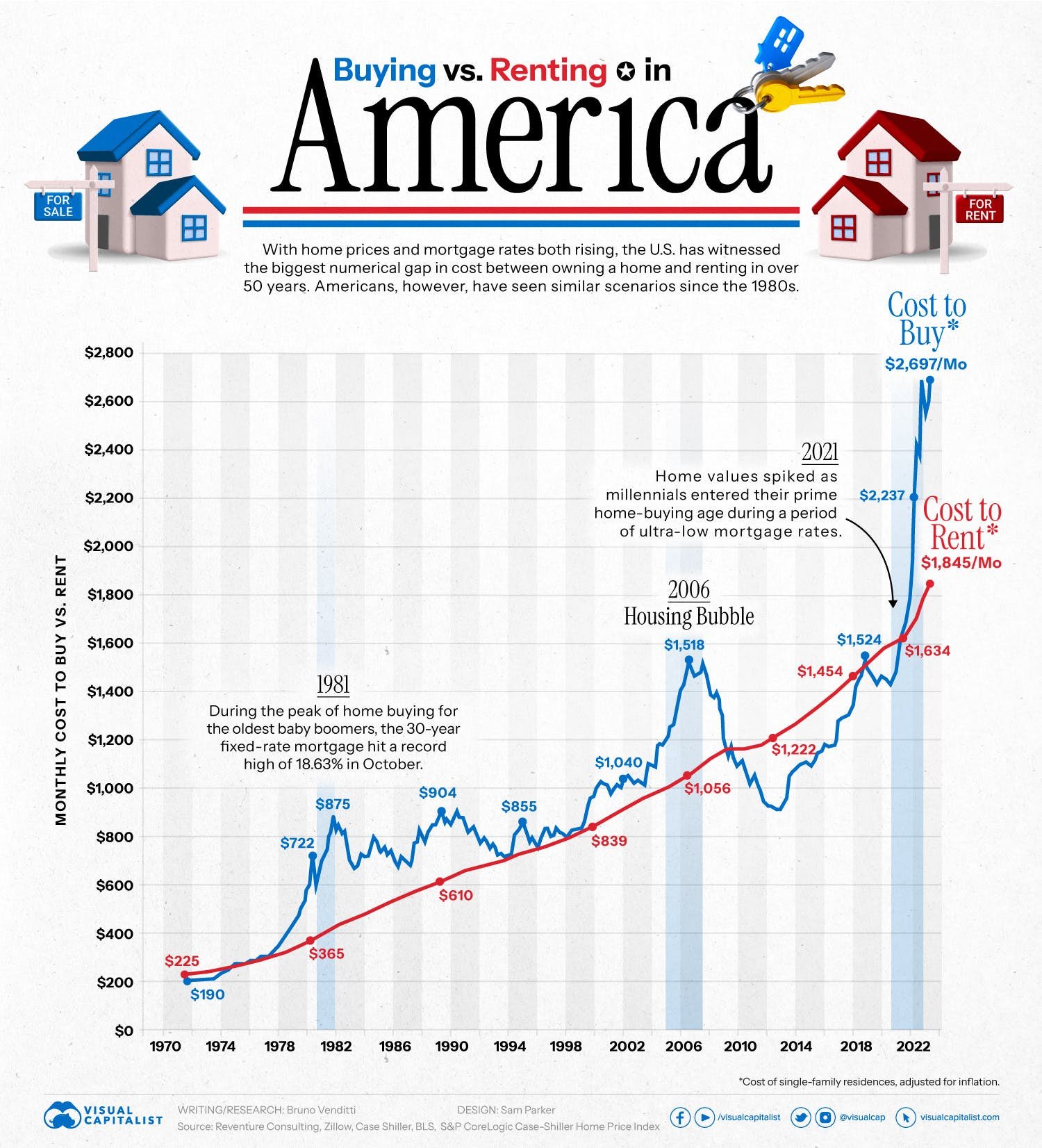
For the first time in years, renting is significantly cheaper than owning the same type of home. Normally, buying a home saves you money in the long run, but today’s high interest rates, rising property taxes, and expensive homeowner insurance have flipped the script.
Let’s break down an example to see why.
Example Property: Home in Pembroke Pines, FL 33026
- Estimated Market Value: $697,400
- Currently Rented: $4,500/month
Cost of Ownership (With 20% Down & 6.7% Interest Rate)
| Expense | Monthly Cost |
|---|---|
| Mortgage (Principal & Interest) | $3,613 |
| Property Taxes (Reassessed Value) | $1,159 |
| Homeowner's Insurance | $541 |
| Maintenance Estimate | $200 |
| Total Monthly Cost to Own | $5,513 |
Cost to Rent
- Monthly Rent: $4,500
That’s a $1,013 per month difference between renting and owning this home—a gap of $12,156 per year.
It’s also important to note that this example assumes a 20% down payment, which is higher than what most buyers put down. If you put down less than 20%, your monthly cost would be even higher, and in most cases, you’d also have private mortgage insurance (PMI) added to your payment.
Why Is Ownership More Expensive Right Now?
Three major factors have driven up the cost of buying a home:
1️⃣ High Mortgage Rates – A 6.7% interest rate significantly increases monthly payments. Just a few years ago, this payment would have been much lower.
2️⃣ Property Tax Reassessments – After a sale, the home’s tax value resets, meaning the new owner pays higher taxes than the previous owner.
3️⃣ Rising Insurance Costs – Florida’s homeowner insurance rates have surged, adding hundreds to ownership costs.
This means that renting is the more affordable choice in today’s market—but this won’t last forever. In high-demand South Florida cities like Pembroke Pines, Weston, Plantation, Davie, and Miami Lakes, home values and rents have historically increased due to limited housing inventory, steady population growth, and strong demand from both local and out-of-state buyers.
With more people moving into these areas each year and fewer homes available for sale, rental prices will inevitably rise to keep up with demand. This makes it even more critical for renters to plan ahead before the cost gap between renting and owning shifts again.
The Cost Gap Will Shrink – What Happens Next?
The current gap between renting and owning won’t last forever. Rental prices are bound to increase over time, even if it’s hard to predict exactly when. Here’s why:
1️⃣ Rental prices increase – As more people rent instead of buy due to high ownership costs, rental demand rises, driving up lease prices. This is the most likely scenario.
2️⃣ Home prices decrease significantly – For the cost of ownership to match current rents, the home values would have to drop by over $100K—something highly unlikely given today’s low inventory and steady demand.
3️⃣ Interest rates drop dramatically – While mortgage rates may decline over time, it would take a major decrease to bring ownership costs in line with rental prices, which isn’t expected in the near future.
Since home prices and interest rates are unlikely to drop significantly, the most realistic outcome is that rents will continue rising. With more people choosing to rent instead of buy, demand for rentals will grow, pushing lease prices higher. On top of that, inflation plays a major role—landlords adjust rental rates to keep up with rising costs, ensuring that leases rarely stay the same year after year.
This means that those who wait too long to buy may find themselves paying more in rent year after year, without the financial stability that homeownership provides.
The Smartest Approach: Think Long-Term
Your goal shouldn’t be to rent forever—it should be to buy strategically. Instead of stretching your budget for a dream home now, consider this:
✅ Buy a home below your means – Choose something affordable now rather than maxing out your budget.
✅ Rent it out later for profit – Turn your first home into a rental when you’re ready to upgrade.
✅ Let the market work for you – Home values and rents rise over time. By getting in sooner, you’re setting yourself up for future financial success.
Bottom Line
Right now, renting is significantly cheaper than owning, but that won’t always be the case. The key is to have a plan:
- Rent if it makes financial sense in the short term.
- Save aggressively for a home purchase.
- Buy when it’s the right time for you—not just when the market says so.
If you want to explore your options, whether leasing or buying, let’s connect! I can help you run the numbers and create a strategy that fits your goals.